
The Pressure of Conventional Marriage
Night and DayThis flow traces the social expectation that women should marry and the different ways the central women question, accommodate, or revise it.
increasing Bearing strength in each event
 decreasing
Bearing strength in each eventdecreasingMarriage as the Default
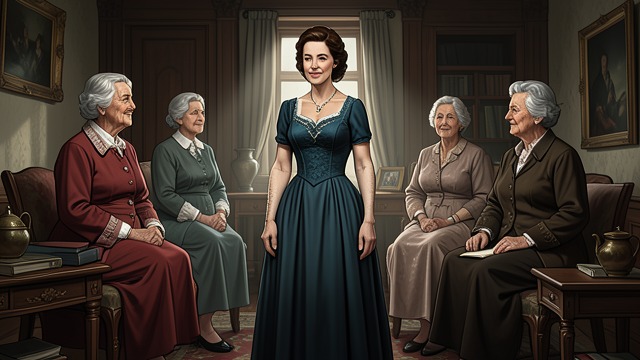
A Recognized Future
Family assumptions
Mrs. Hilbery and the older relatives treat marriage as an obvious and desirable destination for Katharine. Their advice often combines affection with inherited assumptions about women’s roles.
Pressure beneath politeness
Katharine’s beauty and family position make her a subject of repeated proposals and predictions. The expectation is presented not as a single command but as a constant framework for interpreting her actions.
Mary’s Alternative Life
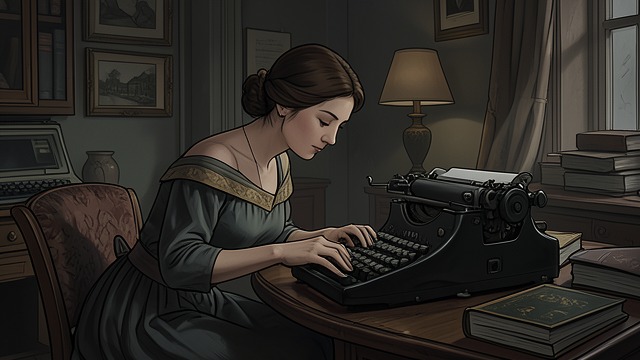
Work Outside the Home
An independent routine
Mary lives alone and works for women’s suffrage, building a public identity not dependent on marriage. Her work and friendships give her a practical alternative to conventional domestic life.
The unresolved question
Mary’s independence does not make her immune to love, but it allows her to judge marriage as a choice rather than an inevitability. Her example complicates Katharine’s assumption that a profession is the only route to self-assertion.
The Engagement Accepted
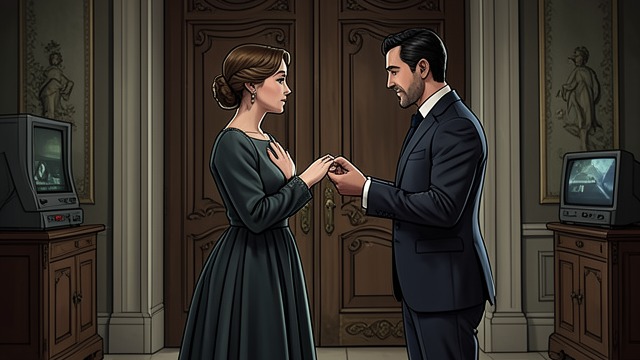
A Convenient Institution
A proposal accepted
Katharine agrees to marry William Rodney, partly because she wants a home of her own and hopes marriage will give her room to develop. Her answer is shaped by practical need as much as by affection.
A social form under question
The engagement meets family expectations but fails to resolve the question of what Katharine herself wants. Marriage becomes an arrangement she must examine, not a natural conclusion.
A Different Female Future

Hidden Ambition
Mathematics and independence
Katharine imagines a life devoted to mathematical study and astronomy, pursuits she has hidden because they seem unfeminine within her family. She wants a form of work not centered on other people’s feelings.
The marriage dilemma
She wonders whether she can marry William while retaining this private vocation. The question exposes the gap between social permission and the freedom to shape a meaningful life.
Choosing Rather Than Complying

A Revised Definition
Marriage reconsidered
Katharine and Ralph become engaged, yet their conversations acknowledge that their connection cannot be made perfectly predictable by marriage. Her choice is more conscious than her earlier acceptance of William.
Freedom within relation
Mary continues public work, Cassandra chooses William, and Katharine chooses Ralph. The novel leaves women with different futures rather than treating one social arrangement as universally correct.
early in the story
during her first months in London
before Christmas
during the Christmas visit
near the ending
